

When a professional football or rugby club needs new training facilities, time is rarely on their side. Pre-season deadlines, mid-season disruptions, or urgent expansions all demand a solution that can be delivered fast, built to a professional standard, and adapted as the club’s needs evolve. This is exactly where temporary sports structures are proving to be a genuinely elite-level solution.
Elite clubs can’t afford to pause conditioning programmes while permanent buildings go through planning, groundworks, and lengthy construction. A temporary commercial structure can remove the need for these processes.
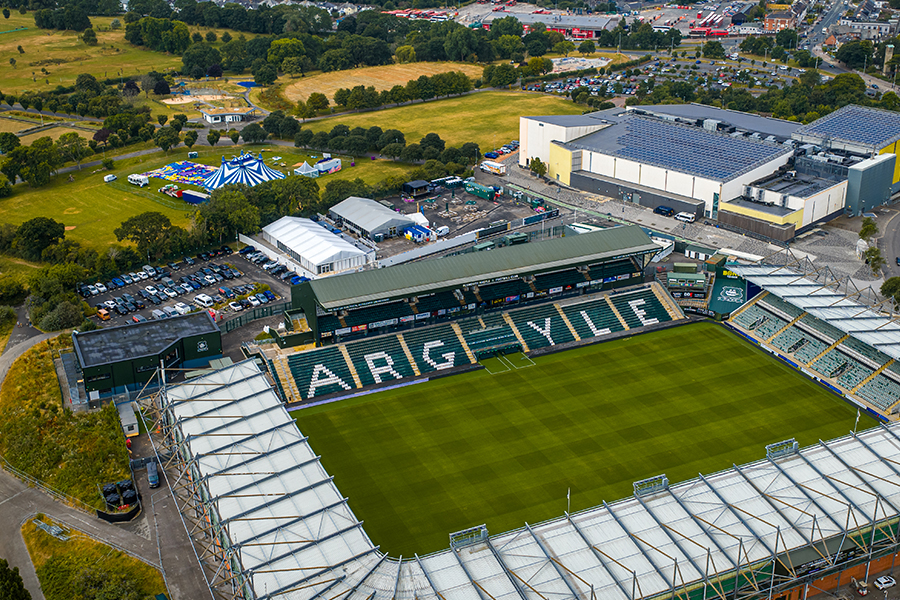
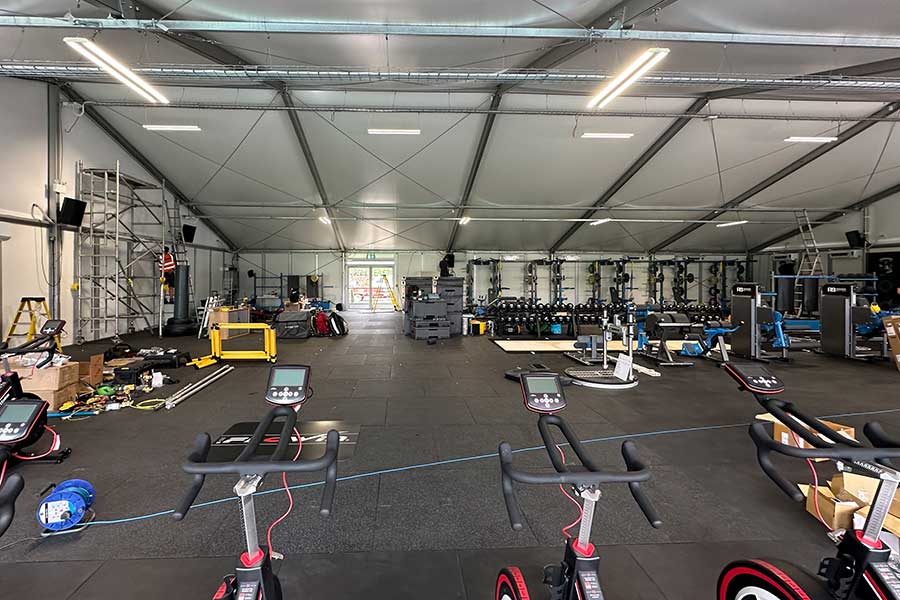
Plymouth Argyle FC is a good example. The club needed a professional-grade fitness facility next to Home Park Stadium so players could stop travelling to separate gyms scattered across the city and train together in one purpose-built space. Fews delivered the entire 15m x 25m gymnasium complete with insulated roofing, solid walling, and a raised cassette floor, from initial design through to handover in a matter of weeks. That speed is possible because these structures use an engineered aluminium frame system allowing fast on-site installation.
Coventry City FC faced a similar challenge at their Blue Lodge training ground, where improvement works elsewhere on site meant they needed a gym facility quickly and without waiting on permanent redevelopment. A 20m x 25m clear span structure, complete with a load-rated cassette beam floor and DDA-compliant ramp access, was installed to give the squad an immediate, fully functional training environment while other works continued around it.
No two clubs need the same footprint, and requirements change season to season. This is where temporary structures outperform permanent buildings: the modular frame systems can be specified to almost any width, length, and height, then reconfigured, extended, or reduced as circumstances demand.
The Coventry and Plymouth projects illustrate this range well. Plymouth’s 15m x 25m gym was tailored around strength and conditioning zones plus physiotherapy space for a single squad. Coventry’s 20m x 25m clear span design offered a larger interior needed to accommodate their equipment layout and accessibility requirements. Both were built from the same underlying system, simply scaled differently to match each club’s operational demands.
That same flexibility works in reverse: for a transitional period, such as while a permanent stadium redevelopment is underway, long-term hire structures can be scaled down, relocated, or removed entirely once no longer required, without leaving a club with an unused permanent building or a costly commitment.
What both case studies demonstrate is that “temporary” doesn’t mean basic. Insulated panel walling, thermal roofing, glazed doors, and durable flooring systems mean these gymnasiums can operate year-round to a standard elite athletes expect, while retaining the fast turnaround and adaptability that permanent construction simply can’t match. For sporting clubs weighing up training facility options, temporary structures offer a rare combination: speed, flexibility, and professional-grade performance.




Because the structures use an engineered aluminium frame system, projects like Plymouth Argyle FC’s 15m x 25m gymnasium have gone from initial design through to handover in a matter of weeks.
Yes. Insulated panel walling, thermal roofing, glazed doors and durable flooring systems mean these gymnasiums can operate year-round to a standard elite athletes expect.
Yes. The modular frame systems can be specified to almost any width, length and height, then reconfigured, extended or reduced as a club’s requirements change.
It can be scaled down, relocated, or removed entirely, for example once a transitional period such as a stadium redevelopment is complete, without leaving a club with an unused permanent building.
Recent projects include a 15m x 25m gymnasium for Plymouth Argyle FC and a 20m x 25m clear span structure for Coventry City FC, each tailored to the club’s equipment layout and accessibility needs.
Call 01527 821789 or use the contact form to speak with the commercial team.


Call 01527 821789 or use our contact form
Matt, Lucy and Jack and Jamie are our dedicated commercial team with extensive expertise and experience designing event solutions. One of them will guide you through every step of the process.
Request a Quote
Registered in England & Wales No. 3930939. VAT Registration GB 521 4722 21. Fews Marquees Ltd.
Registered address:
Chessgrove Park
Ditchford Bank Road
Hanbury, Bromsgrove
Worcestershire B60 4HS
Telephone.
+44 (0) 1527 821 789